
Summit County is one of the easier parts of the Colorado Rockies to reach and one of the harder places to plan well on a first visit.
The towns and resort areas sit fairly close together on a map. Breckenridge, Keystone, Frisco, Dillon, Silverthorne and Copper Mountain can all be part of the same trip. They do not offer the same type of stay, though. A condo near the slopes in Keystone works very differently from a hotel near Main Street in Breckenridge. Frisco makes sense for people moving between several mountains. Copper Mountain is better when the mountain itself is the trip.
This guide covers the decisions that matter before booking: where to stay, whether a car is worth having, which season suits the trip, and how to handle the drive from Denver. It also connects to more detailed guides for lodging, airport transportation, ski rentals, lift tickets and summer activities.
Summit County at a Glance
- Main travel bases: Breckenridge, Keystone, Frisco, Dillon, Silverthorne and Copper Mountain
- Closest major airport: Denver International Airport
- Best-known winter activities: skiing, snowboarding, tubing and snowshoeing
- Popular summer activities: hiking, biking, boating, golf and guided mountain rides
- Typical trip length: three to seven days
- Local public transport: Summit Stage buses are free
Where Is Summit County?
Summit County lies west of Denver in Colorado’s high country. Interstate 70 is the main route into the area and also the road that gives the region much of its basic shape.
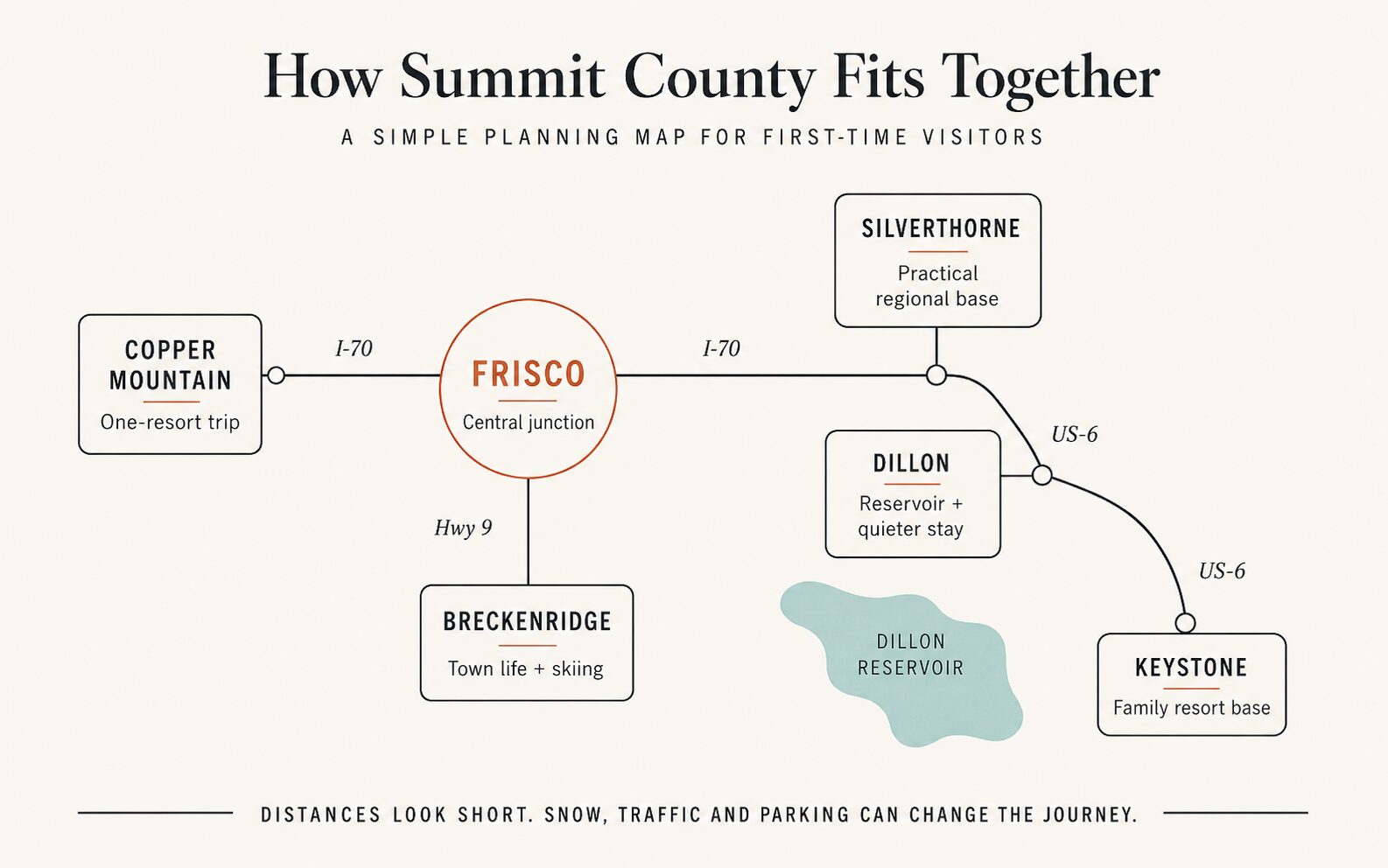
Silverthorne and Dillon sit near the eastern side of Dillon Reservoir. Frisco is farther west, close to the junction where Highway 9 turns south toward Breckenridge. Copper Mountain lies directly beside I-70 west of Frisco. Keystone is east of Dillon, reached along the Snake River corridor.
This matters when choosing lodging. A place described as being “in Summit County” may still be inconvenient for the activity you have in mind. A Silverthorne rental can be practical for shopping and highway access but less appealing if every morning starts at a Breckenridge ski school. Staying at Copper Mountain makes a ski day simple but adds driving when you want dinner in Breckenridge or an evening around Dillon Reservoir.
A Simple Way to Read the Map
Think of Frisco as the central junction. Breckenridge is to the south, Copper Mountain to the west, Keystone to the east, and Dillon and Silverthorne sit around the eastern end of the reservoir.
The towns are close enough to combine, but traffic, snow and parking can make a short distance take longer than expected. Our Summit County maps guide explains the regional layout in more detail.
Which Summit County Town Should You Stay In?
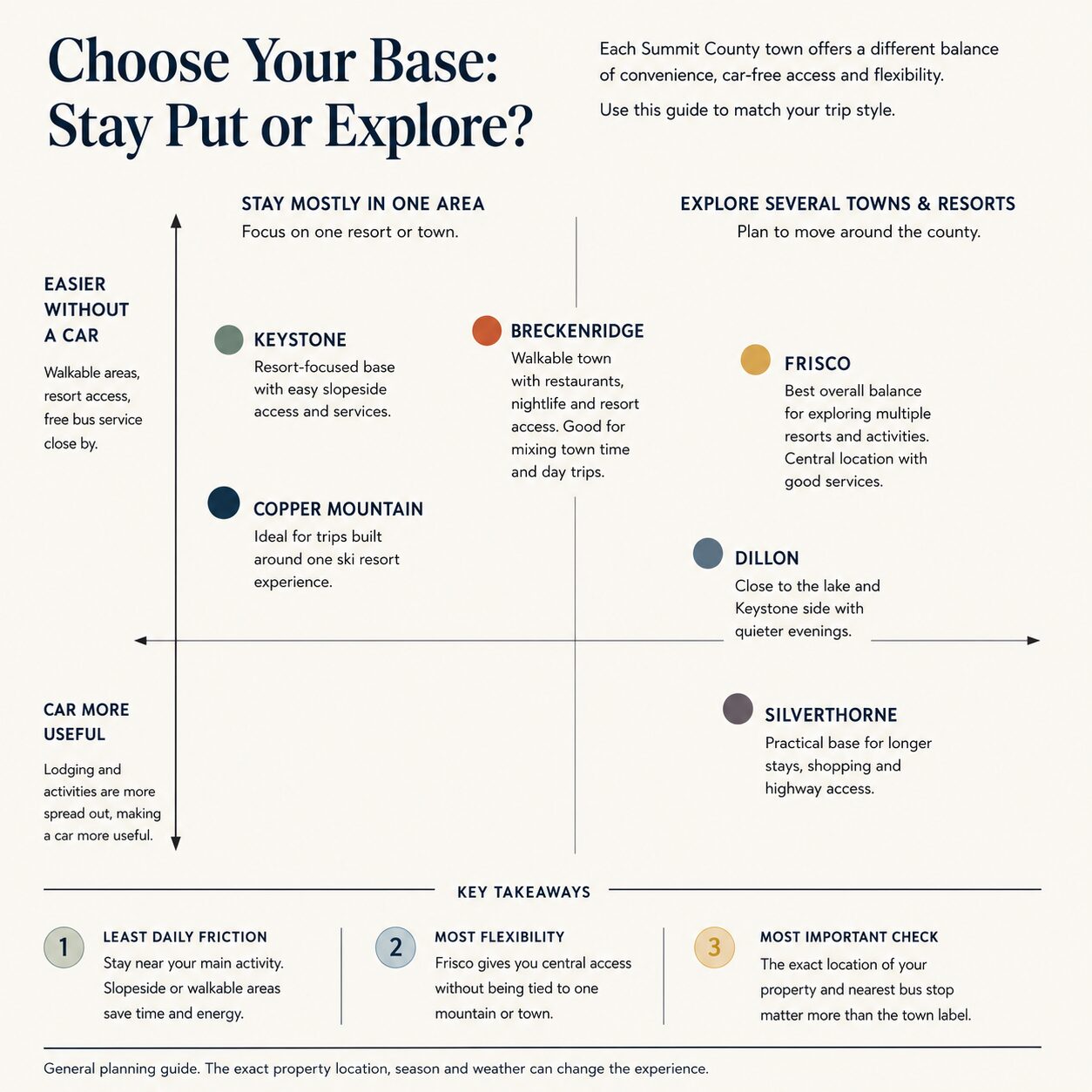
There is no single best base. The right choice depends on how much of the county you plan to see and how often you want to use the car.
| Area | Best for | Main advantage | Possible drawback |
|---|---|---|---|
| Breckenridge | First visits, nightlife and a traditional ski-town stay | Walkable center, restaurants and direct resort access | Busy during popular winter weeks |
| Keystone | Families and resort-focused trips | Convenient slopeside lodging and village facilities | Less of a separate town atmosphere |
| Frisco | Visiting several resorts or mixing towns and activities | Central location near I-70 and Dillon Reservoir | No large alpine ski resort in town |
| Dillon | Reservoir views, concerts and quieter evenings | Good access to the lake and Keystone side of the county | Smaller town center |
| Silverthorne | Practical lodging, shopping and longer stays | Highway access and useful everyday services | The town is spread out |
| Copper Mountain | Trips built around one ski resort | Easy access from lodging to the mountain | Less convenient for exploring the rest of the county |
Breckenridge
Breckenridge is the easiest recommendation for someone who wants a recognizable Colorado ski-town trip. Main Street has restaurants, bars, shops and historic buildings, and much of the center can be handled on foot. Local buses and lodging shuttles reduce the need to drive once you arrive.
It is also the place most likely to feel crowded. Parking can become a daily irritation if the accommodation is outside the useful bus network. Check the exact address rather than relying on a listing that says “near downtown.” A steep half-mile walk feels different in ski boots or after fresh snow.
Keystone
Keystone works well for families, ski lessons and trips where convenience matters more than having a real town outside the resort. River Run Village and the surrounding lodging areas put restaurants, rentals and mountain access close together.
This can make the trip pleasantly simple. It can also feel self-contained. Travellers who want to try several restaurants in different towns or visit multiple resorts will probably use a car or bus more often than expected.
Frisco
Frisco is the most balanced base for exploring. It sits near I-70, has its own Main Street, and provides reasonable access to Breckenridge, Copper Mountain, Dillon and Silverthorne. It is also beside Dillon Reservoir and connected to the county’s recreational path network.
Choose Frisco when the plan includes several ski areas or a mix of summer activities. Do not choose it expecting to walk from the hotel to a major ski lift. You will be commuting to the mountain, even if that commute is fairly short on a good day.
Dillon
Dillon is quieter than Breckenridge and more closely tied to the reservoir. In summer, the marina, shoreline and Dillon Amphitheater give the town a clear identity. It can be a sensible base for Keystone and the eastern side of the county.
The difference between Dillon and Silverthorne is sometimes blurred in accommodation listings. Look at the actual position of the property. Some places are easy to reach from I-70 but not especially convenient for walking around Dillon’s lakefront area.
Silverthorne
Silverthorne is practical. There are shops, restaurants, supermarkets, river access and a wider range of everyday services than in a closed resort village. It is often a good fit for longer stays, mixed groups and travellers who do not need to wake up beside a specific ski lift.
A car is more helpful here because lodging and commercial areas are spread across the valley. Bus routes cover important connections, but they do not make every property equally convenient.
Copper Mountain
Copper Mountain is the straightforward choice for a ski-first holiday. Stay near the mountain, collect equipment, and spend most of the day on the slopes. This removes a lot of morning friction.
It is less flexible as a county-wide base. Frisco is nearby, but dinner, shopping or activities elsewhere still require transport. Copper makes most sense when the group is happy to spend several days in one resort rather than treating the entire county as a checklist.
Choosing a Base Without Overthinking It
Choose Breckenridge for a first visit with restaurants and town life.
Choose Keystone for a family resort trip.
Choose Frisco when you plan to move between several areas.
Choose Dillon or Silverthorne for a more practical regional base.
Choose Copper Mountain when most days will be spent on that mountain.
For property types, neighbourhood trade-offs and booking questions, use the full guide to lodging and accommodations in Summit County.
When Is the Best Time to Visit?
Summit County is a year-round destination, but the trip changes sharply with the season. A good winter plan cannot simply be moved to July, and summer visitors should not assume that every resort lift or restaurant operates daily between peak periods.
Winter
Winter is built around skiing and snowboarding at Breckenridge, Keystone, Copper Mountain and Arapahoe Basin. Tubing, Nordic skiing, snowshoeing and sleigh rides add options for people who do not want to spend every day on downhill terrain.
The main difficulty is logistics. Holiday weeks bring expensive lodging, busy roads and crowded rental counters. A group arriving late in the evening should think carefully before planning lessons or a long drive the next morning. Altitude, travel delays and equipment collection can turn that into a rough first day.
Summer
Summer has more variety. Hiking and mountain biking are the obvious choices, but Dillon Reservoir, golf courses, horseback rides, ATV outings and resort activities make it possible to plan a trip without tackling a major summit.
Days often begin cool, warm quickly in the sun and then change again when clouds build over the ridges. Early starts are sensible for exposed hikes. Carry a light waterproof layer even when the car park is warm.
Fall
Early fall brings cooler nights, changing aspens and fewer visitors after the main summer holiday period. It is a good time for scenic drives, short hikes and town-based trips.
It is also a less predictable time for resort services. Some summer operations have already ended while winter operations have not started. Check each attraction directly instead of assuming that a gondola, rental desk or restaurant will be open because the weather looks pleasant.
Spring and Other Shoulder Periods
Spring can include late-season skiing, muddy lower trails, deep snow higher up and frequent changes in operating schedules. It suits flexible travellers better than anyone arriving with a rigid list.
This is not the best period for forcing every activity into a short weekend. Keep one or two primary plans and a backup that works in poor weather.
Altitude and Mountain Weather
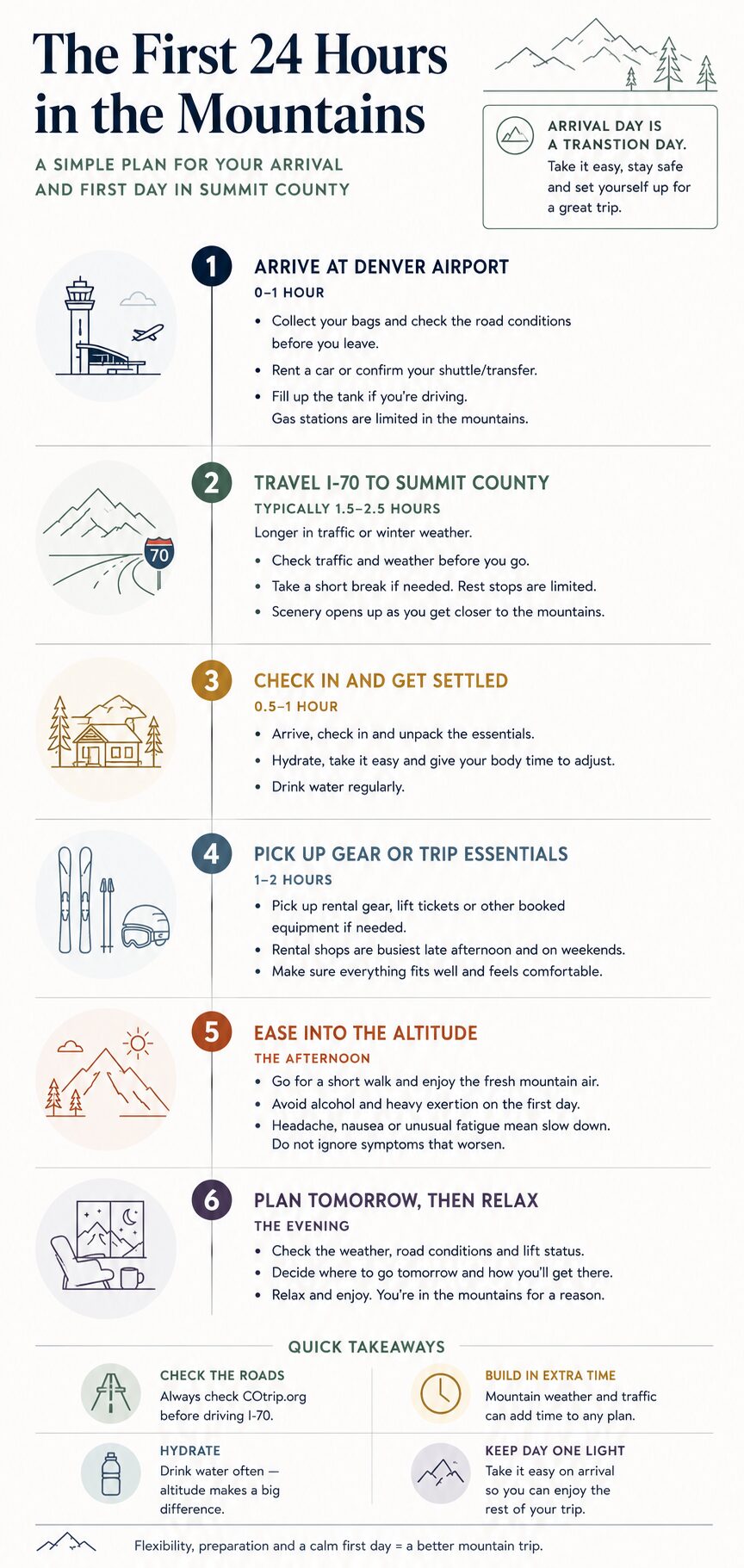
Most Summit County bases sit around 9,000 feet above sea level, with ski lifts and trails climbing much higher. Take the first day more slowly than you might at home. Drink water, use sunscreen and avoid treating arrival evening as the start of a packed itinerary.
Headache, unusual fatigue or nausea should not be brushed off. Descending and seeking medical advice may be necessary when symptoms are severe or getting worse.
Things to Do in Summit County
Trying to cover every activity in one trip usually leads to too much driving. Pick one main reason for visiting, then add one or two things that work near your base.
Skiing and Snowboarding
Breckenridge, Keystone and Copper Mountain are the large resort names most visitors build a winter trip around. Arapahoe Basin offers a different, more mountain-focused setting with less emphasis on a large base village.
New skiers should consider the entire morning routine, not just the trail map. You may need to park, ride a shuttle, collect boots, meet an instructor and store ordinary shoes. Renting from a town shop can cost less or provide more flexibility, while a base-area shop is easier when something needs adjusting during the day.
The separate guide to ski and snowboard rentals in Summit County compares town stores, resort-base shops and equipment delivery. It also covers what beginners actually need to rent.
Lift access deserves the same attention. Window prices can be punishing, and the cheapest option depends on the resort, dates and number of days. Read the guide to Summit County lift tickets before buying. Travellers considering several trips or several resorts should also understand the difference between day tickets and Colorado ski season passes.
Hiking and Biking
There are easy lakeside walks, forest routes, paved recreational paths and high alpine trails across the county. Difficulty is not determined by mileage alone. A short route above the tree line can be harder than a longer path near town because of altitude, exposure and rapidly changing weather.
Do not choose a trail only from social-media photos. Check elevation gain, parking rules, current conditions and whether the route holds snow. A trailhead that looks close to the accommodation may sit at the end of a rough or restricted road.
Bikes are useful around Frisco and Dillon Reservoir, where paved paths connect several parts of the county. The same path can still include meaningful climbs. Ask the rental shop about gradients before deciding that a casual family ride should circle the entire reservoir.
Dillon Reservoir
The reservoir changes the character of the central county in summer. Frisco and Dillon both have marina access, while shoreline paths, viewpoints and picnic areas create easier days between demanding mountain activities.
Boating and paddling require some respect for the setting. Water remains cold, wind can rise quickly, and afternoon conditions may be very different from the calm morning surface. Reserve equipment with enough time to receive a proper safety briefing.
ATV and Jeep Trips
Motorized mountain outings appeal to travellers who want to cover more ground than they could on foot. Some operators offer guided drives, while others rent vehicles for approved routes. The important questions are less glamorous: which trails are permitted, what level of experience is expected, who pays for damage, and what happens if weather closes part of the route.
Do not assume that a normal rental-car agreement allows off-road driving. It usually does not. The guide to ATV and Jeep rentals in Summit County explains rental formats, seasonal limits and what to ask before paying a deposit.
Golf
Mountain golf comes with thinner air, exposed courses and fast-changing conditions. The ball may travel differently than it does at lower elevation, but the more immediate planning issue is weather. An afternoon tee time can be disrupted by wind or thunderstorms even after a clear morning.
Book ahead during the short summer season and ask about club rental, dress rules and cancellation policies. Our overview of golf courses near Breckenridge, Keystone and Frisco helps compare the main options.
Horseback Riding
Horseback rides range from gentle family outings to longer trips on uneven mountain terrain. First-time riders should be honest about comfort and mobility. A two-hour ride is not automatically easy just because the horse does the walking.
Wear long trousers and closed shoes, and bring a layer that can handle wind or a brief shower. Operators may have age, weight and health restrictions. These vary, so check before building the day around a particular ride. See the guide to horseback riding in Summit County for planning details.
Getting to Summit County from Denver
Most visitors arrive through Denver International Airport and then continue west into the mountains. The airport and Summit County are connected by several transport options, but there is no choice that is best for every trip.
Shared Mountain Shuttle
A shared shuttle removes the need to drive I-70 and deal with a rental car after a flight. It works particularly well for travellers staying in Breckenridge, Keystone or Copper Mountain and relying on local buses or resort transport after arrival.
The drawbacks are fixed pickup arrangements, possible stops for other passengers and limited flexibility once you reach the county. Confirm whether the shuttle drops off at the accommodation itself or at a central transfer point.
Private Transfer
A private transfer costs more but can be worthwhile for a family or group carrying ski bags. There is less waiting, and the driver can normally take everyone directly to the property.
Vehicle size matters. A booking for four passengers may not automatically include space for four large suitcases and ski equipment. Put the luggage details in writing.
Rental Car
A rental car makes sense for travellers moving between resorts, trailheads and towns. It is also helpful for lodging outside the main bus corridors.
The benefit disappears if the driver is uncomfortable on snow, the vehicle is poorly equipped or the property charges heavily for parking. Check tires and traction requirements rather than assuming an all-wheel-drive badge solves every winter problem.
Scheduled Bus Connections
Scheduled intercity services can connect Denver with the Frisco area, where travellers may transfer to local transport. This can be cost-effective, but it takes more coordination than a door-to-door shuttle. Leave enough time between connections, especially when a missed bus would affect a flight.
The full Denver Airport to Summit County transportation guide compares shuttles, private vehicles, rental cars and bus connections.
Can You Visit Without a Car?
Yes, but the answer depends on the base and the purpose of the trip.
Summit Stage provides free public bus service around the county, connecting town centres, lodging areas, shops and resort zones. Breckenridge has its own free local transport, and much of its central area is walkable. Some hotels and condominium complexes operate additional shuttles.
A car-free winter trip is realistic when you stay near a useful bus stop and ski at one or two accessible resorts. It is also workable at a self-contained base such as Keystone or Copper Mountain if most activities are nearby.
Summer is less simple. Trailheads, riding stables, golf courses and ATV meeting points may sit outside easy transit routes. Ride-share cars can be scarce at the exact moment everyone wants one, and mobile service is not guaranteed on remote roads.
Check the Bus Stop Before Booking
Do not rely on an accommodation description that says “near public transport.” Open the current Summit Stage map, identify the stop and check whether the route runs at the times you need.
A cheap property can lose its advantage when every ski morning requires two buses and a long wait with equipment.
Driving I-70 in Winter
The I-70 mountain corridor is the part of the trip that catches unprepared drivers. On a dry weekday, the route can feel routine. During heavy snow or peak weekend traffic, the same drive can take much longer and may include closures.
Colorado applies seasonal traction requirements on the mountain corridor, and additional restrictions can be activated during storms. Check the current rules for the exact dates of the trip. Inspect the rental vehicle before leaving the lot. Tires matter more than the confidence of the person at the counter.
Road conditions should be checked through the official COtrip service before departure. Google Maps can estimate congestion, but it cannot make an unsafe drive sensible. If conditions are poor and the driver lacks winter experience, a shuttle is often the better decision.
Before Driving into the Mountains
Check the forecast and live road conditions, confirm that the vehicle meets Colorado traction requirements, keep warm clothing accessible inside the car and avoid scheduling a flight connection around an optimistic driving time.
Friday evenings westbound and Sunday afternoons eastbound are common pressure points. Weather can disrupt any schedule.
Where to Stay: Resort, Town or Highway Base?
Property type can matter as much as town choice.
Slopeside lodging costs more but cuts down the morning routine. This is valuable for families carrying children’s equipment or anyone booked into early lessons.
Downtown lodging is better for restaurants and evenings on foot. Confirm how far the property is from the actual centre; names such as “Breckenridge area” cover more ground than first-time visitors expect.
Condominiums and vacation rentals offer kitchens, living space and easier group accommodation. Check cleaning fees, parking limits and whether stairs or an icy outdoor path separate the parking space from the front door.
Highway-oriented hotels around Frisco and Silverthorne can be practical for road trips and multi-resort skiing. They trade atmosphere for easier access and useful services.
The Summit County accommodation guide compares these choices by town and trip type.
How Many Days Do You Need?
Two Days
A weekend is enough for one main base and one main activity. Stay close to what you plan to do. Commuting across the county to save a little on the room rarely improves a two-day trip.
Three or Four Days
This is a sensible length for a first visit. It allows two or three activity days, an evening in another town and some room for weather or traffic disruption.
Five to Seven Days
A longer stay supports a more varied plan: several ski areas, a reservoir day, a ride or golf round, and time in Breckenridge or Frisco without rushing between bookings.
Keep one day partly open. In the mountains, an unscheduled afternoon is not wasted space. It may become the day with the clearest weather, the easiest road conditions or the energy for an extra trail.
Plan Your Summit County Trip
- Choose the right base. Decide whether the priority is town life, one resort or access to several parts of the county.
- Arrange the trip from Denver. Compare a shared shuttle, private transfer, scheduled bus and rental car.
- Book the main activity. Reserve ski access, a tee time, a guided ride or another limited-capacity activity first.
- Sort out equipment. Check what is included, where it is collected and how changes are handled.
- Leave room for conditions. Keep a backup plan for snow, thunderstorms, smoke or a closed road.
First-Time Planning Mistakes
Booking by County Name Instead of Exact Location
Two properties can both be listed in Summit County while creating completely different daily routines. Check the address against the resort, bus stop or trailhead you expect to use most often.
Planning the First Day Too Aggressively
A flight, baggage collection, mountain transfer, grocery stop and equipment fitting can consume most of a day. Add altitude and poor sleep, and an early next-morning booking may be less appealing than it looked at home.
Assuming Every Town Is Walkable
Central Breckenridge and Frisco are manageable on foot. Other areas are more spread out, and a listing’s distance may ignore hills, snowbanks and roads without comfortable pedestrian access.
Buying Ski Access Before Comparing the Whole Trip
The cheapest-looking ticket may lock the group into dates or resorts that do not fit the lodging. Compare the full cost of transport, rental collection and mountain access before paying.
Ignoring Shoulder-Season Closures
Warm weather does not guarantee summer operations. A resort can look open because lodging is available while lifts and seasonal activities remain closed. Verify the specific attraction.
Relying on One Navigation App
Download the regional map and save key addresses before leaving town. Mountain roads, construction and poor signal can make a simple turn more annoying than it should be.
Frequently Asked Questions
What is the best town to stay in Summit County?
Breckenridge is the easiest first-time choice for a walkable centre and direct resort access. Frisco is better for exploring several ski areas and towns. Keystone suits family resort trips, while Dillon and Silverthorne work well as practical regional bases.
Is Frisco or Breckenridge a better base?
Choose Breckenridge for nightlife, restaurants and a ski town that works without much driving. Choose Frisco for a more central position and easier access to Copper Mountain, Dillon, Silverthorne and Breckenridge.
Can I visit Summit County without renting a car?
Yes. Airport shuttles and free local buses make car-free trips possible, especially in Breckenridge and self-contained resort areas. A car becomes more useful for remote trailheads, summer activities and accommodation away from bus routes.
Which ski resorts are in Summit County?
The main alpine ski areas are Breckenridge, Keystone, Copper Mountain and Arapahoe Basin. Nearby resorts outside the core county area can also be reached by road, but they should not determine the base unless they are part of the actual plan.
Is Summit County worth visiting in summer?
Yes. Hiking, biking, Dillon Reservoir, golf, horseback riding, ATV outings and resort activities create enough variety for several days. Summer also allows more movement between towns than a winter trip built around one mountain.
How long should I spend in Summit County?
Three or four days is a good first visit. A full week makes sense for a ski holiday, a family trip or a summer stay combining several activities.
What airport should I use?
Denver International Airport is the main arrival point for most visitors. From there, travellers can use a mountain shuttle, private transfer, rental car or scheduled bus connection.
Summit County Planning Guides
Use the guides below when you are ready to move from general planning to specific bookings.
Accommodation and Transportation
- Where to stay in Summit County
- Denver Airport shuttles and transfers
- Maps of Breckenridge, Keystone, Frisco, Dillon, Silverthorne and Copper Mountain
Ski Trip Planning
Summer and Outdoor Activities
Making the Final Choice
For a first trip, keep the plan simple. Choose Breckenridge when the town itself is part of the attraction. Choose Keystone or Copper Mountain when easy resort access matters most. Use Frisco as a central base, or Dillon and Silverthorne when practical lodging and road access carry more weight.
Then book around one main activity rather than trying to cover the whole county. Summit County is compact enough to explore, but weather, traffic and altitude still set the pace.